The concept of time
The concept of time is one of the most familiar yet least understood aspects of human experience. We measure it constantly—seconds ticking on clocks, days marked on calendars, years celebrated with milestones—but its true nature remains deeply elusive. At its core, time is a framework that allows us to sequence events, to distinguish between what has happened, what is happening, and what is yet to come. Without it, change would be impossible to perceive, and the universe would feel static and incomprehensible.
From a scientific perspective, time is intertwined with space, forming what physicists call spacetime. This idea suggests that time is not a separate, universal constant ticking away identically everywhere, but something flexible that can stretch and compress depending on speed and gravity. For example, objects moving at extremely high speeds or existing near massive bodies experience time more slowly relative to others. This phenomenon, known as time dilation, has been experimentally confirmed and even plays a role in modern technology such as GPS systems, which must account for slight differences in time experienced by satellites versus receivers on Earth.
Yet beyond physics, time carries a psychological dimension that is just as fascinating. Humans do not experience time uniformly. Moments of joy seem to pass in an instant, while periods of discomfort or boredom can feel endlessly prolonged. Memory also reshapes our sense of time, compressing long stretches into brief recollections or expanding short events into vivid, detailed narratives. This subjective quality reveals that time, as we live it, is as much a construct of the mind as it is a property of the universe.
Culturally, time influences how societies function and organize themselves. Some cultures emphasize punctuality and strict scheduling, viewing time as a resource that can be “spent” or “wasted.” Others adopt a more fluid approach, focusing less on precise timing and more on the natural flow of events and relationships. These differences can affect everything from business practices to social interactions, highlighting how deeply time is embedded in human behavior.
Philosophers have long debated whether time truly exists independently of our perception or if it is merely a conceptual tool we use to understand change. Some argue that only the present moment is real, with the past existing only in memory and the future as a set of possibilities. Others contend that all moments—past, present, and future—exist simultaneously, and that our perception of time flowing is an illusion.
In everyday life, time often feels like a scarce commodity. People strive to manage it efficiently, balancing work, rest, and personal pursuits. This constant negotiation gives time a sense of value, shaping priorities and decisions. Despite all our attempts to control it, however, time remains ultimately beyond our grasp—continuously moving forward, indifferent to human desires.
In the end, time is both a measurable quantity and a deeply personal experience. It governs the motion of galaxies and the rhythm of our daily routines, while also shaping memories, expectations, and the meaning we assign to our lives. Whether viewed through the lens of science, psychology, or philosophy, time remains one of the most profound and mysterious elements of existence.
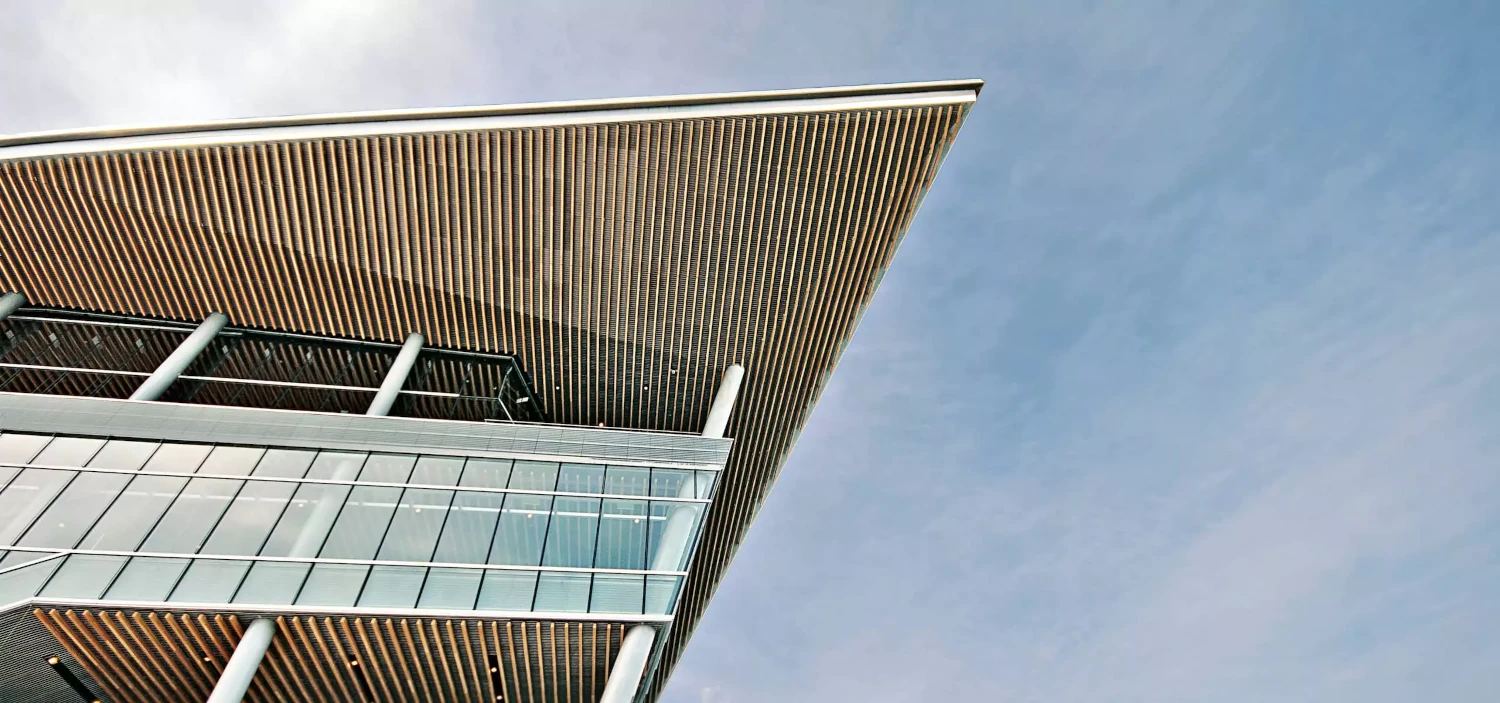
A passion for creating spaces
Our comprehensive suite of professional services caters to a diverse clientele, ranging from homeowners to commercial developers.
Renovation and restoration
Time also plays a crucial role in biology, governing the rhythms that sustain life. Many organisms, including humans, operate according to internal clocks known as circadian rhythms. These cycles influence sleep, metabolism, hormone release, and even mood. Disruptions to these rhythms—such as jet lag or irregular sleep patterns—can have noticeable effects on both physical and mental health, showing how deeply time is embedded in our biology.
Continuous Support
In technology, time has become a foundation for synchronization and coordination. Computer systems rely on precise timing to execute processes, manage data, and communicate across networks. Even a tiny discrepancy in timing can lead to errors or inefficiencies. Atomic clocks, which measure time with incredible precision, are used to keep global systems aligned, demonstrating how modern society depends on exact temporal measurement.
App Access
The relationship between time and memory is another intriguing area of thought. Memories are not perfect recordings of past events but reconstructions shaped by emotion, context, and perspective. As time passes, memories can fade, distort, or even become entirely reinterpreted. This means that our understanding of the past is constantly evolving, influenced by the present moment.
Consulting
In literature and art, time is often explored as a theme and narrative device. Stories may unfold chronologically, jump backward through flashbacks, or even loop in unconventional ways. These techniques allow creators to mimic the complexity of human experience, where time is rarely felt as a simple, linear progression. Artistic interpretations of time can challenge audiences to rethink their assumptions about reality.
Project Management
Economically, time is frequently equated with value. The phrase “time is money” reflects how labor, productivity, and efficiency are measured in temporal terms. Businesses optimize processes to save time, while individuals often seek ways to use their time more effectively. This perspective can drive innovation but may also lead to stress when time feels perpetually limited.
Architectural Solutions
Finally, the human awareness of time gives rise to a sense of mortality. Knowing that life is finite shapes how people make choices, set goals, and find meaning. It can inspire urgency and ambition, but also reflection and appreciation. In this way, time is not just a backdrop for existence—it is a central force that defines the human condition.
An array of resources
Our comprehensive suite of professional services caters to a diverse clientele, ranging from homeowners to commercial developers.
Études Architect App
- Collaborate with fellow architects.
- Showcase your projects.
- Experience the world of architecture.


Études Newsletter
- A world of thought-provoking articles.
- Case studies that celebrate architecture.
- Exclusive access to design insights.
“Études has saved us thousands of hours of work and has unlocked insights we never thought possible.”
Annie Steiner
CEO, Greenprint
Watch, Read, Listen
Join 900+ subscribers
Stay in the loop with everything you need to know.